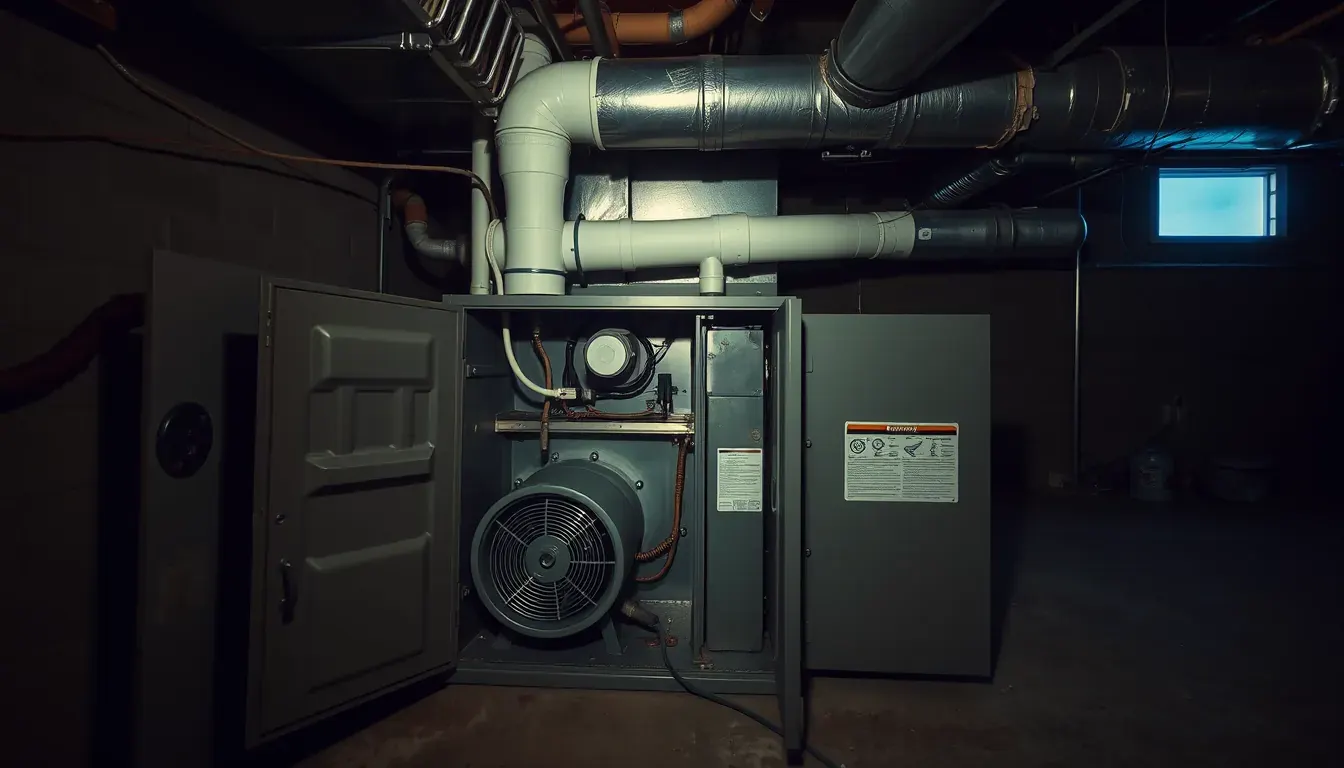
If your furnace makes a loud bang or boom as the burners light, turn the heat off and call for service. Carrier says it suggests a clogged burner delaying ignition. Most other noises are mechanical. Squeals and grinding point to motor bearings or a belt, buzzing to electrical parts, dirt or a loose panel, whistling to a clogged filter, and pops in the ducts to metal expanding.
A buzz with a burning smell is urgent too. Lennox calls electrical buzzing a fire risk. If you smell gas or a carbon monoxide alarm sounds, get out first. Repair prices depend on the part. Trane lists $100 to $250 for a capacitor and $300 to $900 for a blower motor. Fixr reports $562 to $1,045 for a blower motor.
Is a loud furnace noise dangerous?
Some sound is normal. Lennox describes a soft hum when the blower kicks on, a gentle click at ignition, and a brief whoosh of air through the vents. What matters is a sound that is new, louder than before, or getting worse. Trane's troubleshooting page says loud hissing or banging "could indicate a larger problem at hand."
Sort the noise into one of three groups:
- Act now: a boom or bang from inside the furnace as the burners light, a buzz with a burning smell, grinding or screeching metal, or any noise along with a gas smell or a CO alarm.
- Book a service call: a steady squeal, a hum from a motor that will not spin, a buzz that keeps going when the furnace is off, or repeated clicking with no flame.
- Check it yourself first: whistling at the registers, a rattling panel, and pops or ticks in the ducts as they heat and cool.
What each furnace noise usually means
These causes come from the troubleshooting guides of Carrier, Goodman, Lennox and Trane, and from This Old House on duct noise. A technician's tests on your furnace beat any chart.
| What you hear | When | Usual cause | What to do |
|---|---|---|---|
| Bang or boom inside the cabinet | As the burners light | Delayed ignition: a clogged burner (Carrier), wrong gas pressure, misplaced burners or bad orifices (Goodman) | Turn the heat off. Call a pro. |
| Pop from the burners | As the burners shut off | "Extinction pop," a form of flashback (Goodman) | Call a pro. |
| Pops, ticks or thumps in the ducts | As warm air arrives, and again as the ducts cool | Sheet metal expanding and shrinking, or duct walls flexing with pressure (This Old House) | Usually not urgent. See the duct section below. |
| Squeal or screech | While a motor runs | Worn bearings, or a worn or loose belt on older belt-driven blowers (Carrier) | Check the belt if you have one. Otherwise call. |
| Grinding or scraping | While a motor runs | Worn bearings or loose parts (Carrier) | Turn it off. Call a pro. |
| Buzzing | Any time, even when idle | Loose wiring, a failing transformer, capacitor or relay, a struggling motor, dirt, or a loose panel (Lennox) | With a burning smell, power off and call. |
| Blower will not start | When the blower should start | Weak or failed capacitor (Carrier), seized bearings or a failed motor (Goodman) | Call a pro. |
| Whistling | While air is blowing | Clogged filter or gaps in the ductwork (Carrier), closed registers (This Old House) | Change the filter. Open the registers. |
| Rattling | While running | Loose duct connections or panels (Carrier), a loose access panel (Trane) | Seat the panels. Call if it is inside a motor. |
| Repeated clicking, no flame | At startup | Possibly failed ignition tries; Goodman's control retries when it senses no flame | Note the blinking code. Call a pro. |
Which part is making the noise? Listen to the timing
A gas furnace starts its parts in a fixed order, so the moment a noise begins tells you a lot. Goodman's service manual for its 80% single-stage furnaces gives this sequence on a call for heat:
- The inducer starts first. It is a small fan motor fixed to the vent pipe, and it runs a short pre-purge.
- The igniter warms up. Then the gas valve opens and the burners light.
- The flame sensor must see flame within seconds, or the control shuts the gas off and retries.
- The main blower starts 30 seconds after the flame is sensed.
- When the thermostat is satisfied, the gas shuts off. The inducer runs 15 more seconds. The blower keeps running for an off delay, 90 seconds by default and adjustable by the installer.
Lining a noise up with that sequence narrows it down. The first seconds before any flame belong to the inducer, the instant of ignition to the burners, and about half a minute after the flame to the main blower. Other brands use different delays, so treat this as a guide.
Why does my furnace make a loud bang when it turns on?
There are two common sources, and they call for very different responses. A single boom from inside the furnace cabinet at the moment the burners light can be delayed ignition, and a technician should check it. Pops, thumps or bangs from the ductwork, often away from the furnace, can be the sheet metal moving as it heats.
Delayed ignition: the bang inside the furnace
Goodman's manual defines delayed ignition as "a delay in lighting a combustible mixture of gas and air which has accumulated in the combustion chamber." It says furnace design makes this "extremely unlikely unless safety controls have been by-passed or tampered with." Carrier's guide ties a startup boom to a clogged burner and says it needs professional diagnosis.
Goodman lists what a technician should check: gas pressure, burner position, a blocked carry-over or cross-lighter that carries flame between burners, and deformed or misaligned burner orifices. ENERGY STAR puts gas pressure, burner combustion and the heat exchanger on its heating tune-up list. It notes that "a dirty burner or cracked heat exchanger causes improper burner operation." None of these are homeowner jobs.
A pop right when the burners shut off is a related problem. Goodman calls it "extinction pop," a form of flashback, where the flame burns back inside the burner. The checks are the same: gas pressure, burner alignment and the orifices.
Duct expansion: the bang in the ductwork
This Old House explains that sheet-metal ducts expand when hot air rushes into them and shrink as they cool. A duct rubbing against wood can pop as it heats, then pop again as it cools. Pressure differences between the supply and return ducts can also flex duct walls in and out, which is called oil-canning.
The fixes it suggests are mechanical. Rubber pads can isolate ducts from wood framing. Insulation can dampen the sound. A technician can check that the system is not pushing more air than it was designed for.
Why is my furnace humming or buzzing?
A soft hum when the blower starts is normal. Lennox separates that from a buzz that is sharper, more persistent, or getting worse. It lists these causes:
- Loose or faulty wiring that arcs or vibrates. Lennox calls this a fire hazard.
- A blower motor struggling with worn bearings or dirt, or a motor that is failing.
- A failing transformer, which can buzz constantly, a capacitor near the end of its life, or a relay.
- Dust and debris around the blower and motor.
- An access panel that is not fully secured.
A hum from a motor that will not spin is a different problem. Carrier notes that a weak or failed capacitor can keep the blower motor from starting. On newer variable-speed blowers, Goodman's GRVT96 chart covers a blower that fails to start 10 times in a row. It lists seized bearings, an obstruction in the blower housing, or a failed motor.
What you can do: with the power off, clear dust from around the blower, replace a gray, dusty filter, and make sure every access panel is closed and latched. Those are the three checks Lennox lists. It also says to call if the buzz continues when the furnace is not running.
Why is my furnace squealing or making a high-pitched noise?
A squeal or screech from a running motor can mean worn bearings. Carrier lists grinding, squealing or banging from the blower as signs of worn bearings or loose parts. On older furnaces with a belt-driven blower, a worn or loose belt squeals too, and Carrier's fix is to tighten or replace it. Trane names an unlubricated belt as one cause of a noisy oil furnace.
Do not reach for the oil can by default. Goodman's manual says the bearings in its inducer and blower motors "are permanently lubricated by the manufacturer. No further lubrication is required." Carrier says to oil a motor only if it has oil ports, using a few drops of motor oil. If your motor has no ports, a squeal is a service call.
A thin, steady whistle can come from the air itself. Carrier points to a clogged air filter or gaps in the ductwork. This Old House adds that a clogged return filter forces air through smaller openings at higher speed, which can whistle at the register.
Where the squeal comes from matters. The inducer is the small motor by the vent pipe, and it runs before the burners light. The main blower is the larger fan in the blower compartment, and it starts after them. If the inducer is screeching, read our guide to inducer and pressure switch problems. The burners cannot light until the inducer proves draft.
Why is my furnace so loud when the air is blowing?
If the furnace sounds fine but the air is loud at the vents, look at airflow first. This Old House notes that choking down the vent in one room can raise air speed, and noise, at registers throughout the house. Registers close to the blower are louder. Ductwork can also carry the sound of a noisy blower all over the house.
Before calling, open every supply register, clear furniture off the return grille, and change the filter. If it is still loud, the fixes This Old House describes are technician work. They include checking that the system is not moving more air than designed, adjusting the blower speed, adding a flexible connection between the furnace and the ducts, and adding return ducting.
A rattle is often a loose part. Carrier says to look for loose connections in the ductwork or panels, and Trane names a loose access panel. Press the furnace doors firmly into place. A rattle from inside a running motor is a service call.
Safe checks before you call
- Rule out an emergency. If you smell gas or a CO alarm is sounding, skip the rest and follow the steps in the last section.
- Record the noise. Film a full cycle on your phone with sound, from the call for heat to shutdown. Trane asks owners to note when the noise happens and what it sounds like, then pass that on to the technician.
- Find where it comes from. Stand by the furnace for one start. Is the sound inside the cabinet, at the vent pipe, or out in the ducts? Note whether it starts before the flame, at the flame, or once the blower starts.
- Change the filter. ENERGY STAR recommends inspecting, cleaning or changing filters once a month. Goodman's manual says disposable filters should be replaced every two months or as required, and warns never to run the furnace without one.
- Open the registers and clear the return. Closed vents and a blocked return grille raise air speed and whistling.
- Seat the panels. Make sure each access door is closed and latched, as Lennox advises. A loose door can rattle or buzz.
- Look, with the power off. Check the blower compartment for debris or anything touching the fan wheel. If your furnace has a belt, Carrier suggests checking it for wear or looseness. Oil a motor only if it has oil ports.
- Stop there. Burners, gas pressure, wiring, capacitors and motors are technician work. Goodman's manual says only trained personnel should service the equipment.
What furnace noise repairs cost
No source prices "a noisy furnace." The cost depends on the part behind the noise. Two publishers give part-by-part ranges, and they do not always agree. Trane's cost article, published September 2024, calls its figures estimates and does not name a data source. Fixr's page, updated August 2025, reports a national average furnace repair of $485.
| Part or service | Trane | Fixr |
|---|---|---|
| Service call | $50 to $200 | Not listed |
| Labor rate | $75 to $150 per hour | $87 to $162 per hour |
| Capacitor | $100 to $250 | Not listed |
| Transformer | $100 to $250 | Not listed |
| Igniter | $100 to $250 | $96 to $178 |
| Flame sensor | $80 to $240 | $68 to $127 |
| Blower motor | $300 to $900 | $562 to $1,045 |
| Inducer motor | $400 to $1,100 | Not listed |
| Gas valve | $200 to $800 | Not listed |
| Control board | $300 to $650 | $390 to $725 |
| Heat exchanger | $1,000 to $3,000 | Not listed |
| Clean, replace filters and service | Not listed | $192 to $843 |
The blower motor shows the gap between sources: Fixr's low end of $562 sits near the middle of Trane's $300 to $900 range. Trane also says emergency rates can run double to triple the normal hourly rate. A belt squeal or a loose panel should not turn into a new motor, so ask what failed and how it was tested. If a quote still feels high, see how to check an HVAC quote.
Oil furnace or heat pump making a loud noise?
This guide is written around gas furnaces. For a noisy oil furnace, including an "airplane" roar at startup, Trane names a loose access panel or an unlubricated belt as possible causes. It asks you to note when the noise happens and what it sounds like, then call. ENERGY STAR's tune-up list covers oil connections and burner combustion as well as gas.
If the noise comes from the outdoor unit of a heat pump or air conditioner, the furnace parts above are not the cause. Turn the system off if it grinds or screeches, and leave the refrigerant circuit closed. The EPA requires technicians who service equipment that could release refrigerant to be certified under Section 608.
Call a pro now if
- A carbon monoxide alarm sounds. The CPSC says not to look for the source. Move outside to fresh air and call 911 or the fire department.
- You smell gas. Goodman's manual says not to light any appliance, not to touch electrical switches or use any phone in the building, and to call the gas supplier from a neighbor's phone.
- Anyone has a headache, dizziness, nausea or shortness of breath while the furnace runs. The CPSC lists these among CO symptoms. Get everyone outside first.
- The furnace booms as the burners light, or pops loudly when they shut off.
- A buzz comes with a burning smell, flickering lights, or a tripped breaker. Carrier calls overheating or smoke from a motor urgent warning signs.
- You hear grinding, scraping or screeching metal from a motor.
- The flame looks abnormal. Goodman says to contact a qualified service agent at once if it does.
- The noise continues after you change the filter, open the registers, and seat the panels.
The CPSC recommends having the heating system professionally inspected and serviced every year. It also recommends CO alarms on every level of the home and outside sleeping areas. Lennox suggests a dealer visit if your furnace is 15 or more years old and has not had a tune-up in over a year.
If a technician links the noise to a cracked heat exchanger, read our guide to cracked heat exchanger symptoms before you agree to a replacement. If the furnace has stopped heating entirely, start with no heat in the house.
Questions people ask
Is it normal for a furnace to make noise?
Some noise is. Lennox describes a soft hum when the blower starts, a gentle click at ignition, and a brief whoosh of air through the vents as normal. A bang as the burners light, grinding, screeching, or a buzz with a burning smell is not. A noise that is new, louder than before, or getting worse is worth a service call.
Should I turn off my furnace if it is making a loud noise?
Yes for a boom as the burners light, a buzz with a burning smell, grinding or screeching metal, or any noise along with a gas smell or a CO alarm. Lennox says to shut the furnace off if a buzz comes with a burning smell, flickering lights, or a tripped breaker. For a whistle or rattle, check the filter, registers and panels first.
Why does my furnace make a loud noise when it shuts off?
Two common reasons. A pop from the burners as they go out is what Goodman's service manual calls extinction pop, a form of flashback. A technician checks gas pressure, burner alignment and the orifices. Pops in the ducts after shutdown are usually sheet metal shrinking as it cools, as This Old House explains.
Can a dirty filter make a furnace loud?
Yes. Carrier links whistling to a clogged air filter or gaps in the ductwork. This Old House says a clogged return filter forces air through smaller openings at higher speed, which can whistle at the registers. ENERGY STAR recommends inspecting, cleaning or changing filters once a month.
Should I oil my furnace blower motor?
Only if it has oil ports. Goodman's service manual says the bearings in its inducer and blower motors are permanently lubricated and need no further lubrication. Carrier says to add a few drops of motor oil only where a motor has oil ports. A squeal from a sealed motor is a job for a technician.
Why does my furnace keep clicking but not light?
A single click at ignition is normal. Repeated clicking with no flame can mean the furnace is trying to light and failing. On Goodman's 80% single-stage furnaces, the control closes the gas valve and retries when it does not sense flame, then locks out after 3 tries. Note any blinking code on the board and call for service.
Sources
- Carrier: Furnace Troubleshooting Guide
- Carrier Canada: Furnace Blower Motor Repair and Replacement Guide
- Lennox: Why Is My Furnace Making a Buzzing Noise?
- Goodman (Daikin Comfort): Service and Troubleshooting, 80% Single Stage Gas Furnaces, RS6621301
- Goodman (Daikin Comfort): GRVT96/GDVT96 Service and Troubleshooting, RS6612305
- Trane: Furnace Troubleshooting, 7 Gas Furnace Solutions
- Trane: Oil Furnaces Troubleshooting
- Trane: Average Furnace Repair Cost
- Fixr: Furnace Repair Cost
- This Old House: How to Quiet Noisy Ducts
- This Old House: Common Cause for Noisy HVAC
- ENERGY STAR: Heating and Cooling Maintenance Checklist
- CPSC: Carbon Monoxide Questions and Answers
- EPA: Section 608 Technician Certification