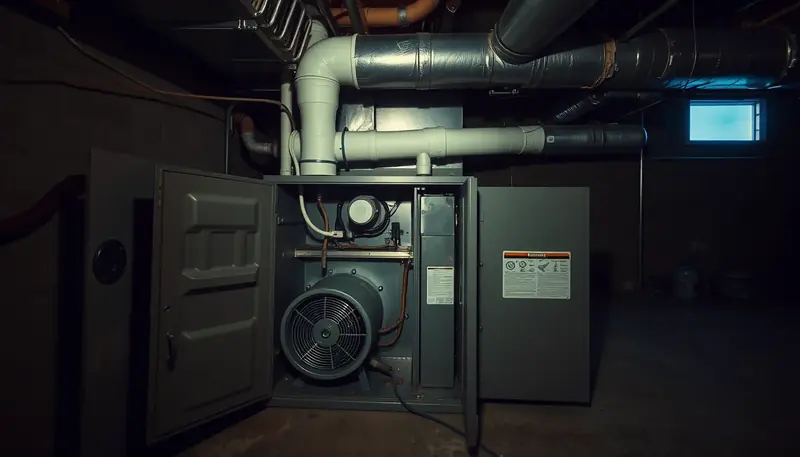
A furnace tune-up is a yearly visit, best booked in early fall, where a technician checks the burners, flame sensor, gas pressure, heat exchanger, venting, blower, wiring and drain, then measures how the furnace runs. Carrier says a thorough one takes 1 to 2 hours and typically costs $70 to $400.
What does a furnace tune-up include?
Checklists vary by company. The closest thing to a national baseline is ANSI/ACCA 4 QM, a standard from the Air Conditioning Contractors of America that sets "the minimum tasks that should be performed" on a maintenance inspection. Its full text sits behind ACCA's copyright terms, so this table uses free checklists from ENERGY STAR, the Department of Energy, Carrier and Goodman.
| Task | What the technician should do | Listed by |
|---|---|---|
| Filter | Check it, then clean or replace it | Carrier, Goodman, ENERGY STAR |
| Thermostat | Check settings and that it calls for heat properly | Carrier, ENERGY STAR |
| Burners and igniter | Inspect for dirt, rust, soot or scale; clean the burners | Carrier |
| Flame sensor | Clean it if coated, then measure the flame signal | Goodman |
| Gas pressure and input | Check against the rating plate and adjust if needed | ENERGY STAR, DOE, Goodman |
| Heat exchanger | Inspect for cracks, holes, leaks and corrosion | ENERGY STAR, DOE, Carrier, Goodman |
| Venting | Check the vent pipe, chimney and outside openings; test for flue gas spillage | DOE, Carrier, Goodman, CPSC |
| Temperature rise | Measure supply air minus return air and compare with the range in the furnace specifications | Carrier, Goodman |
| Blower | Inspect and clean the motor and wheel | Carrier |
| Electrical | Tighten connections; measure voltage and current on motors | ENERGY STAR, Goodman |
| Condensate drain | On high-efficiency furnaces, check and clean the tubes, trap and drain line | Carrier, Goodman |
| Gas piping | Check the pipes to and inside the furnace for leaks | Carrier |
| Safety check | Run a full heating cycle and confirm the controls work | Carrier, ENERGY STAR |
The sources are the ENERGY STAR maintenance checklist, the furnace tune-up list in a Department of Energy guide, the check-up list in a Carrier owner's manual, and the annual inspection list in a Goodman service manual.
One checklist line deserves a question: oiling the motors. ENERGY STAR says to lubricate moving parts. But the Carrier manual says its inducer and blower motors come pre-lubricated, and Goodman says its motor bearings are permanently lubricated. The DOE list limits oiling the blower motor to old furnaces under 75% efficiency. If a newer furnace's invoice says "oiled motors," ask where the oil ports are.
Is HVAC maintenance necessary?
For a gas furnace, every safety agency and manufacturer source we read says yes, once a year. The CPSC says to have the heating system "professionally inspected and serviced annually." Washington's State Fire Marshal says the same for furnaces. Goodman's manual says at least once per year at the start of the heating season. The Carrier manual asks for a semiannual inspection, or annual at least.
The reasons are the parts you cannot see. ENERGY STAR says faulty gas connections are a fire hazard, and a dirty burner or cracked heat exchanger makes the furnace run less safely. The CPSC wants chimneys and flues checked for blockages, corrosion and loose or broken connections. The Carrier manual warns that if the vent pipe has holes, is blocked or is disconnected, toxic fumes can escape into your home. Our furnace carbon monoxide guide covers the signs.
There is a warranty reason too. Bryant's condensing furnace warranty says installation, use, care and maintenance "must be normal" and follow the owner's manual. It also excludes labor and normal maintenance from coverage. Carrier's maintenance page says skipping annual maintenance may affect warranty coverage on some systems. Keep every tune-up invoice with the date, model and serial number.
Is HVAC maintenance worth it? What the studies found
For energy savings, the evidence favors cooling equipment more than furnaces. A Minnesota Department of Commerce research project field-tested more than 100 systems and surveyed more than 700 homeowners. Tuning air conditioners and heat pumps, mostly fixing refrigerant charge and airflow, raised their efficiency by about 12% on average. About one in six improved by more than 25%.
Furnaces were different. The same study found "limited opportunities" to improve gas furnace efficiency. Most furnaces tested were high-efficiency models with little to adjust. The furnace checks were also narrow: gas pressure, temperature rise, blower-off delay and the air shutter.
Heat can also be lost on the way to the rooms. In a DOE Building America study of 48 Iowa homes, about 10% of the heat available from the furnace did not reach the living space, on average. In 10 homes studied closely, system tune-ups could deliver up to 23% more of the furnace's heat to the rooms.
So the case for a furnace tune-up rests more on the safety checks and the warranty terms below than on the gas bill. The DOE tune-up list includes air sealing the connections between the furnace and the main ducts, so ask for it.
How much is a furnace tune-up?
Price guides agree on the low end and disagree on the top. Carrier puts a standard inspection and tune-up at $70 to $400, depending on the provider and your location. Fixr, updated January 2026, says furnace maintenance runs $70 to $300. It puts the national average for any HVAC maintenance visit at $275.
| Source | Furnace tune-up | Notes |
|---|---|---|
| Carrier (October 2026) | $70 to $400 | Standard inspection and tune-up |
| Fixr (January 2026) | $70 to $300 | Most HVAC maintenance visits $150 to $350 |
| CostHelper (undated) | $70 to $200 | Typically about $100 to $125 |
| Bob Vila (January 2023, citing HomeAdvisor) | $100 to $200 | Gas $80 to $170, oil $100 to $200, electric $70 to $130 |
The Bob Vila figures are the oldest here, from January 2023. CostHelper gives no date. Fixr lists a separate service call, for diagnostics and minimal repairs, at $70 to $200. Before the visit, ask what the price covers and whether repairs get quoted before any work starts.
Two furnace tune-ups in 45 minutes: did I get decent service?
It was less than half the usual time. Carrier says a thorough tune-up typically takes 1 to 2 hours, depending on the system's condition and the depth of the checklist. Bob Vila's guide says about 1 to 2 hours when no repairs are needed. Two furnaces in 45 minutes is about 22 minutes each.
Time alone does not settle it. A high-efficiency furnace in good shape may have little to adjust, as the Minnesota study found. Judge the visit by what was measured and written down. Ask for the report and look for these:
- The temperature rise in degrees, next to the range in the furnace specifications. Goodman's manual says a wrong rise can overheat the heat exchanger or make it condense.
- Gas pressure and gas input. Goodman says input must not exceed the rating stamped on the rating plate.
- The flame sensor signal in microamps.
- Heat exchanger and vent findings, ideally with photos.
- On a high-efficiency furnace, a note that the condensate trap and drain were cleaned.
- The filter size, and whether it was replaced.
- Any combustion or carbon monoxide reading, and where it was taken.
A row of checkmarks with no numbers does not show what was measured. Call the company and ask. Our cracked heat exchanger guide explains what the CO readings on a report mean.
What HVAC maintenance should I do myself?
Less than you might expect. The Carrier owner's manual says untrained people can clean and replace air filters, and "all other operations must be performed by trained service personnel." Your job is to look, listen and keep things clear. Before the heating season:
- Check the filter. ENERGY STAR says to inspect it monthly, and the Carrier manual says every 4 weeks. Goodman says to clean or replace it every two months or as needed. Carrier's website says to replace it every 1 to 3 months. Use the same size and type, and never run the furnace without one.
- Clear the area. Washington's State Fire Marshal says to keep anything that can burn at least 3 feet from a furnace. Carrier says not to block the furnace's air openings.
- Check the pipes outside. Carrier says to check the combustion air intake and the vent pipe outside the house for blockage.
- Look at the vent pipes indoors. Carrier lists sags, holes, cracks, water leaks, blockage and disconnections to look for. If you find holes, a blockage or a disconnected pipe, Carrier says not to run the furnace. Call for service.
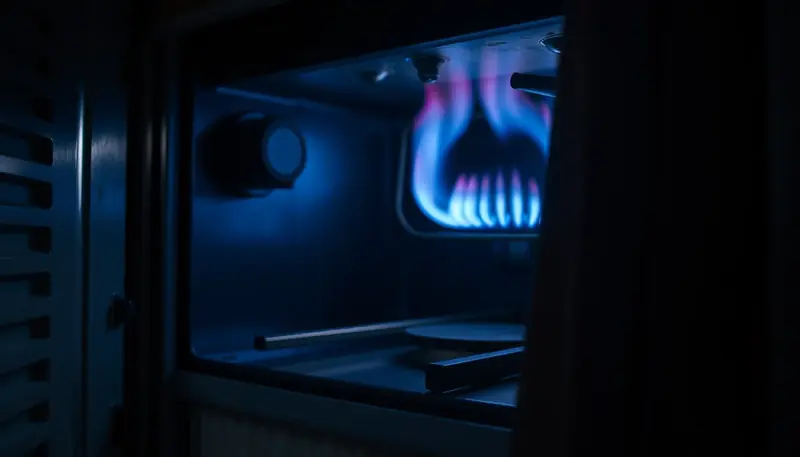
- Watch the flame if your furnace has a viewing window. Carrier says the flames should be clear blue, almost transparent. Goodman says stable, soft and blue, not curling, floating or lifting off. Carrier says a loud noise when the burners light means shut it down and call.
- Look under the furnace. Water at the base of a high-efficiency furnace can point to the condensate drain. Goodman and Carrier leave cleaning it to a qualified servicer.
- Test your CO alarms. The CPSC says to have them on every level of the home and outside sleeping areas, and to check the batteries regularly.
- Book early. ENERGY STAR suggests heating check-ups in the fall and cooling check-ups in the spring, because contractors get busy in winter and summer.
If you also have central air or a heat pump, its spring check covers refrigerant. The EPA requires Section 608 certification for technicians who service equipment that could release ozone-depleting refrigerants. Its sales restriction lets only certified technicians buy those refrigerants or their substitutes. Refrigerant is not a homeowner job.
How to clean a furnace flame sensor, and why manuals leave it to a tech
The flame sensor is a metal rod that detects the burner flame. Trane says it makes sure the gas valve only opens while flames are burning, and that a dirty or faulty one can shut the furnace off early. The usual sign is burners that light, then go out soon after. Trane says cleaning or replacing the sensor may fix it.
The Goodman service manual marks this job "qualified servicer only." It says fuel or air can leave a nearly invisible coating that insulates the rod and weakens the flame signal. A qualified servicer then "must carefully clean the flame sensor with steel wool" and confirm the output matches the spec sheet. The Goodman controls in that manual expect 1 to 8 microamps. With power and gas off, the job is a light rub of the rod, then a test run with a meter on the signal.
So why leave it for the tune-up? Goodman says only a qualified servicer should handle the hot surface igniter, because bare fingers or rough handling can make it fail early. Only a meter shows whether the signal is back in range. Goodman blames the coating on contaminated fuel or combustion air, so if it keeps coming back, ask the technician what is getting into the air the furnace burns.
If the furnace still drops its flame after a cleaning, Goodman's checklist for a weak signal includes the wiring connections, the gap between sensor and burner, and poor grounding. With no reading at all and parts that test good, its next step is the ignition control module. All of that is a service call.
Is an HVAC maintenance plan worth it?
A plan is a yearly fee for scheduled visits or perks. Fixr reports $150 to $500 a year. It says some plans include a tune-up and some only discount one, and most add discounts on service calls, preferred scheduling and lower emergency fees. Bob Vila's 2023 guide reports $150 to $500 a year, or $10 to $30 a month.
Today's Homeowner, updated September 2025, lists average plan prices of $220 a year for gas heat or a heat pump, $290 for oil heat, and $390 for heating plus air conditioning.
Do the math before you sign. Price each included visit at the single-visit rate and add them up. Ask how many visits are included, the repair discount, whether after-hours fees are waived, and how the plan renews and cancels.
Check your utility first. CostHelper says some utilities offer $20 to $50 furnace tune-up rebates. Around Philadelphia, PECO pays its electric customers $50 toward heat pump maintenance and $25 for central AC; see our Philadelphia page. In Houston, CenterPoint runs a ComfortCheck AC tune-up program, covered on our Houston page.
What if a tune-up ends in a replacement quote?
A tune-up is when problems get found. If a technician says the heat exchanger is cracked or the furnace is unsafe, ask for the evidence in writing: photos or video, the CO readings and where they were taken, and the model and serial number. Our cracked heat exchanger guide lists what to ask for and how to get a second opinion.
If a part failed, check the warranty before you pay. Bryant's warranty, for one, covers parts but not labor. Before you sign for a new system, get another quote. Our HVAC quotes guide covers how to compare them, and when the FTC's Cooling-Off Rule lets you cancel a sale made in your home.
Call a pro now if
- You smell gas or hear hissing near the furnace. Leave first, then call 911 once you are outside.
- A CO alarm sounds, or people in the house have headaches, dizziness, nausea or confusion, symptoms the CPSC lists. Get outside, then call 911.
- You see soot, rust or scale around the burners. Carrier says call your dealer and do not run the furnace.
- The flames are yellow, curling or lifting off the burners, or the burners light with a loud bang.
- Vent pipes are sagging, cracked, separated or dripping.
- Water is pooling at the base of the furnace.
- The burners still light and go out after a filter change or a flame sensor cleaning.
When you call, have the furnace brand, model and serial number, the date of the last service, and any blinking code. If you are booking a routine tune-up instead, ask for a written report with readings. Our no heat checklist covers what to try first if the furnace has stopped.
Questions people ask
How often should a furnace be serviced?
Once a year, before the heating season. Goodman's service manual says at least once per year at the start of the season. The CPSC says to have the heating system inspected and serviced annually, and a Carrier owner's manual asks for a semiannual inspection, or annual at least. Check the filter far more often. ENERGY STAR says once a month.
How long does a furnace tune-up take?
Carrier says a thorough one typically takes 1 to 2 hours, depending on the furnace's condition and how deep the checklist goes. Bob Vila's cost guide says 1 to 3 hours, or about 1 to 2 when no repairs are needed. A shorter visit can still be fine on a furnace with little to adjust, but it should leave you a written report with readings.
Can I do my own furnace tune-up?
Only part of it. Carrier's owner's manual says untrained people can clean and replace filters, and all other work belongs to trained service personnel. You can also keep the area clear, check the vent pipes, watch the flame color and test your CO alarms. Gas pressure, combustion, the heat exchanger and the flame sensor are technician work.
Does skipping a tune-up void my furnace warranty?
Not automatically, but it can weaken a claim. Bryant's furnace warranty requires care and maintenance that follow the owner's manual, and Carrier's website says skipping annual maintenance may affect coverage on some systems. Keep every invoice with the date, the model and the serial number.
Does a new furnace need a tune-up?
The manuals make no exception for new furnaces. Goodman says at least once per year, and Bryant's furnace warranty asks for maintenance that follows the owner's manual. The Minnesota field study found new cooling systems in new homes gained about as much from adjustment as older ones. For furnaces, it found little to adjust on most high-efficiency models.
How is a heat pump or AC tune-up different?
It adds refrigerant charge and airflow, which the Minnesota study found were the most common problems, worth about 12% in efficiency on average. Only EPA Section 608 certified technicians may buy refrigerant, including substitutes, so that part is never DIY. A furnace tune-up centers on combustion, venting and the heat exchanger instead.
Sources
- ENERGY STAR: Heating and Cooling Maintenance Checklist
- U.S. Department of Energy, Building America (PNNL and ORNL): Energy Renovations, HVAC, A Guide for Contractors to Share with Homeowners (2011)
- CPSC: Carbon Monoxide Questions and Answers
- CPSC: Carbon Monoxide Information Center
- Washington State Patrol, State Fire Marshal: Heating and Space Heater Safety (January 2026)
- ACCA: ANSI/ACCA 4 QM, Maintenance of Residential HVAC Systems
- Minnesota Department of Commerce: Proper installation and maintenance of residential heating and cooling equipment reaps savings (2017)
- DOE Building America via OSTI: Energy Savings From System Efficiency Improvements in Iowa's HVAC SAVE Program (2013)
- EPA: Section 608 Technician Certification
- EPA: Refrigerant Sales Restriction
- Carrier: Complete Guide to Annual Furnace Maintenance (October 2026)
- Carrier: Condensing Gas Furnace Owner's Manual (catalog OM58-125)
- Goodman (Daikin Comfort): GRVT96/GDVT96 Service and Troubleshooting, RS6612305
- Trane: Furnace Main Burner Shuts Off After Ignition
- Bryant: Limited Warranty for Condensing Gas Furnace (39004BY578)
- Fixr: How Much Does HVAC Maintenance Cost? (updated January 2026)
- Bob Vila: Furnace Tune-Up Cost (updated January 2023)
- CostHelper: Furnace Tune-Up Cost
- Today's Homeowner: How Much Does HVAC Maintenance Cost? (September 2025)
- PECO: Heating and Cooling Rebates
- CenterPoint Energy: Heating and Cooling Savings (ComfortCheck A/C Tune-Up)